

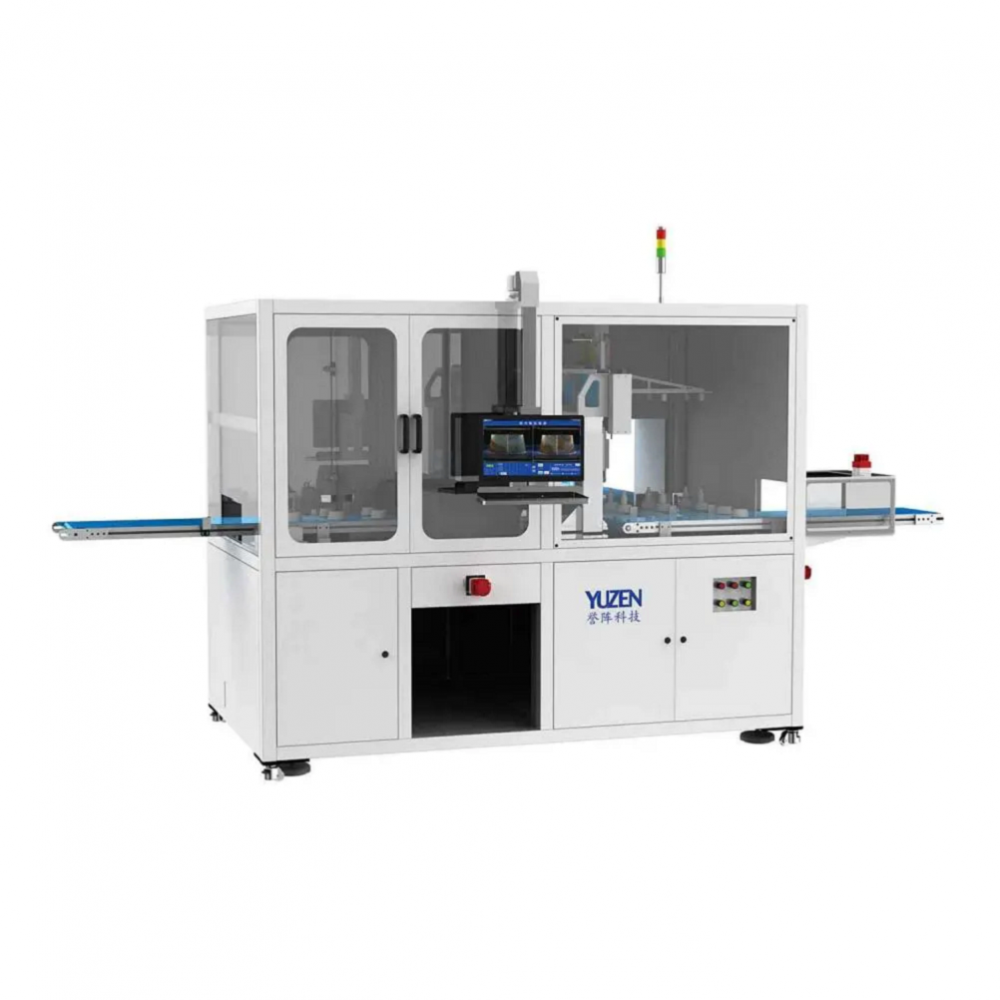
1. Inspection speed: The machine should be capable of inspecting at a high speed to ensure efficient production. The speed should be adjustable to accommodate different product sizes.
2. Inspection accuracy: The machine should be able to detect even the smallest defects on the in-mold labeled products. The accuracy should be high to ensure that only high-quality products are released to the market.
3. Inspection capability: The machine should be able to inspect different types of in-mold labeled products, including containers, lids, and cups.
4. Inspection method: The machine should use advanced inspection methods such as vision inspection, laser inspection, and ultrasonic inspection to ensure accurate and reliable results.
5. User interface: The machine should have a user-friendly interface that allows operators to easily set up, operate, and monitor the inspection process.
6. Data storage and analysis: The machine should be able to store and analyze inspection data to help operators identify areas of improvement and make necessary adjustments to the production process.
7. Safety features: The machine should have safety features such as emergency stop buttons and safety guards to protect operators from accidents.
8. Maintenance requirements: The machine should have low maintenance requirements to minimize downtime and ensure efficient production. Regular maintenance should be easy to perform and require minimal downtime.